
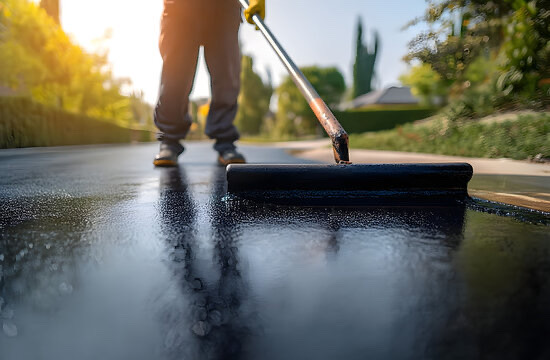
Winnetka is known for its tree canopy, and many driveways spend most of the day in shade. That's great for summer comfort and curb appeal, but shade changes how asphalt ages and how a sealcoat cures. Knowing the difference helps you get a longer-lasting result from driveway sealcoating.
How shade affects an asphalt driveway
Sun is hard on asphalt because UV light dries out the binder. Shaded driveways fade more slowly, but they have their own problems:
- Moisture. Shaded asphalt stays damp longer after rain and snowmelt, giving water more time to soak into small openings.
- Organic stains. Leaves, seed pods, berries and sap leave marks that can etch into an unprotected surface.
- Moss and grit at the edges. Damp borders collect debris and can grow moss, which loosens the edges over time.
A sealcoat helps with all three by closing up the surface so water and stains sit on top instead of soaking in.
Why cleaning matters more under trees
Sealer won't bond to a layer of dirt, pollen or sap. On a tree-covered driveway, cleaning is the most important part of prep. Every job we do starts with edging the borders, cleaning the surface thoroughly and treating oil spots. Areas with heavy sap or debris get extra attention so the coating bonds to the asphalt itself.
Between coats, a leaf blower or broom every week or two in the fall keeps debris from sitting on the driveway and staining it.
Drying and curing on a shaded driveway
Shade is the biggest reason two driveways sealed on the same day can be ready at different times. In warm, dry weather, most driveways can take foot traffic after about 24 hours and cars after about 48. A driveway that's mostly shaded can take longer, especially if the air is humid or the night is cool. The sealer manufacturer's instructions also set limits.
The simplest rule: check the shadiest section before you drive on it. If it isn't fully dry, give it more time. Our guide on how long after sealcoating you can park explains why patience here pays off.
Picking the right day
For shaded driveways, the forecast matters more than usual. The best sealing days have:
- Temperatures of at least 50°F and rising, ideally well above that by afternoon.
- Dry pavement, with no rain the night before and morning dew gone.
- No rain expected for about 24 hours after application.
Mid-summer and early fall often provide the warmest, most reliable days for shaded properties. If rain moves into the forecast, we'll reschedule rather than risk the finish.
How often to seal
Shaded driveways don't fade as fast, so it's easy to wait too long. Use the condition of the surface, not just the color: if water soaks in rather than running off, or you see loose grit and new hairline cracks, it's time. For most driveways that's every two to three years. Sealing more often than needed builds up coating that can peel, which is covered in how often you should sealcoat in Illinois.
Cracks, roots and repairs
Large tree roots can lift or crack asphalt. Sealcoating covers fine hairline cracks but doesn't fix heaved sections, wide cracks or potholes. Those need repair first, and we'll point them out honestly in your estimate.
Typical pricing
Most residential driveway sealcoating projects range from $250–$550. Your final price depends on driveway size, surface condition, preparation, and any additional repairs needed. Request a free estimate for pricing specific to your driveway.