
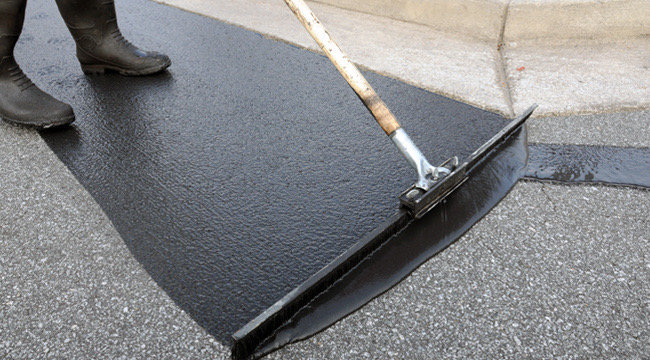
Kenilworth has many older homes with a lot of character, and their driveways often have it too: narrow layouts, tight turns, concrete aprons, and borders of brick or stone that frame the asphalt. On a driveway like that, the quality of a sealcoating job shows most at the edges. This guide covers what to expect and what to ask for.
Why the edges matter most
On a simple driveway, a little overspray along the lawn barely shows. On a driveway bordered by brick, limestone or decorative concrete, sealer on the wrong surface stands out and can be very hard to remove. Careful driveway sealcoating on an older property includes:
- Edging the asphalt cleanly so the coating ends at a straight, defined line.
- Hand-applying sealer along borders instead of spraying up to them.
- Keeping the coating off concrete aprons, walkways, steps and garage floors.
- Working carefully around gates, posts, lamp bases and planting beds.
Before the job, point out any surface you're particular about. A good crew will want to know.
Narrow and tight driveways
Older driveways are often narrower, with sharper turns and less room on either side. That means more of the job is hand work, and more care is needed with drying. Tight turns are where tires twist the most, so for the first week after sealing, roll straight in and out where you can and avoid turning the wheel while the car is stopped.
Choosing the right sealer
Asphalt-emulsion sealers are the standard choice for residential driveways. Some Illinois communities restrict coal-tar based sealers, so it's worth asking any contractor what product they use. Very cheap jobs sometimes rely on heavily watered-down sealer that looks good briefly and wears off early. Our guide to sealcoating costs covers the questions worth asking.
Preparation on older asphalt
Older surfaces tend to be more weathered and porous, so cleaning and oil spot treatment matter even more. Every job we do includes edging, cleaning and oil spot treatment before any sealer goes on. If the asphalt has wide cracks, potholes or sunken sections, those need repair first, and we'll say so honestly in your estimate. Can you sealcoat over driveway cracks? explains why.
When to seal and how often
Sealer needs dry pavement, temperatures of at least 50°F and rising, and about 24 hours without rain, plus any limits the manufacturer sets. In the Chicago area, that means late spring through early fall. Being close to the lake, spring can stay cool a little longer, so early summer and early fall are often the most dependable times. Plan on a new coat every two to three years, and skip a year if the existing coat is still even and water still runs off.
Drying and curing
In warm, dry weather most driveways can take foot traffic after about 24 hours and cars after about 48. Shade from mature trees, humidity and cooler temperatures stretch that. Check the shadiest part of the driveway before you drive on it.
Pricing
Most residential driveway sealcoating projects range from $250–$550. Your final price depends on driveway size, surface condition, preparation, and any additional repairs needed. Request a free estimate for pricing specific to your driveway.
Driveways with lots of borders and hand work fall within that range like any other, with size and condition being the main factors. Send us your address for a free written estimate.