
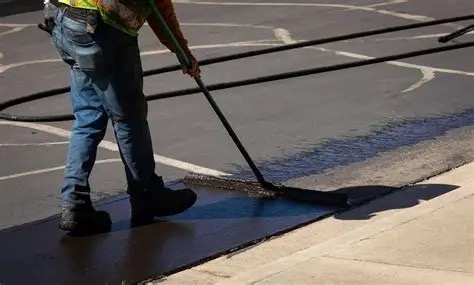
Weather decides more about driveway sealcoating than almost anything else. In Glencoe, being close to Lake Michigan means springs that can stay cool and damp, humid summer stretches, and winters with plenty of freeze-thaw cycles and road salt. This guide walks through the year so you know when to inspect your driveway, when to seal it, and how to protect it in between.
Spring: inspect after the snow melts
Early spring is the best time to look at your driveway, because winter damage is easy to see. Walk it once the snow is gone and look for:
- New hairline cracks, especially along the edges and near the street.
- Loose stone or grit collecting at the bottom of the driveway.
- Areas where water now soaks in instead of running off.
- Oil stains that have spread over the winter.
If you see two or more, your driveway is likely ready for sealing this year. Our list of signs your driveway needs sealcoating goes into more detail. Spring is also the best time to request an estimate, since schedules fill quickly once the weather warms up.
Late spring: the season opens
Sealer needs dry pavement, temperatures of at least 50°F and rising, and about 24 hours without rain, along with the sealer manufacturer's own limits. Close to the lake, spring can stay cool longer than inland suburbs, so the season sometimes starts a bit later. Rather than sealing on the first warm day, it's better to wait for a stretch where both days and nights stay mild.
Summer: the most reliable weather
Summer usually brings the warmest, driest days, which means predictable drying and fewer rain delays. On very hot days, sealer can dry too fast on hot pavement, so starting earlier in the day gives a smoother finish. Humid days slow drying, especially on shaded parts of the driveway. In warm, dry weather most driveways are ready for foot traffic after about 24 hours and cars after about 48, though shade, humidity and product instructions can stretch that.
Early fall: the smart time to seal
A coat applied in late August or September goes into winter fully cured, ready for snowmelt and road salt. That's when asphalt takes the most damage. The fall window closes once nights regularly drop below about 50°F, so it's best not to wait until the last warm week. The best time of year to sealcoat a driveway in Illinois explains the timing in more depth.
Winter: protect what you sealed
No sealing happens in winter, since sealer won't cure in the cold. A few habits help the coating last:
- Shovel or plow promptly so snow doesn't melt and refreeze on the surface.
- Use only as much de-icer as you need, and sweep up excess once it's done its job.
- Ask plow services to keep the blade slightly raised so it doesn't gouge the surface.
Our article on what road salt does to your blacktop driveway covers this in more detail.
Every two to three years
Most driveways do best with a new coat every two to three years. Sealing every year builds up too much coating, which can crack and peel. If your driveway doesn't need it yet, we'll tell you.
Prep and repairs
Every residential sealcoating job we do includes edging, cleaning and oil spot treatment. Sealer covers fine hairline cracks, but wide cracks, potholes and sunken areas need repair first. We'll flag those honestly in your estimate.
Pricing
Most residential driveway sealcoating projects range from $250–$550. Your final price depends on driveway size, surface condition, preparation, and any additional repairs needed. Request a free estimate for pricing specific to your driveway.