
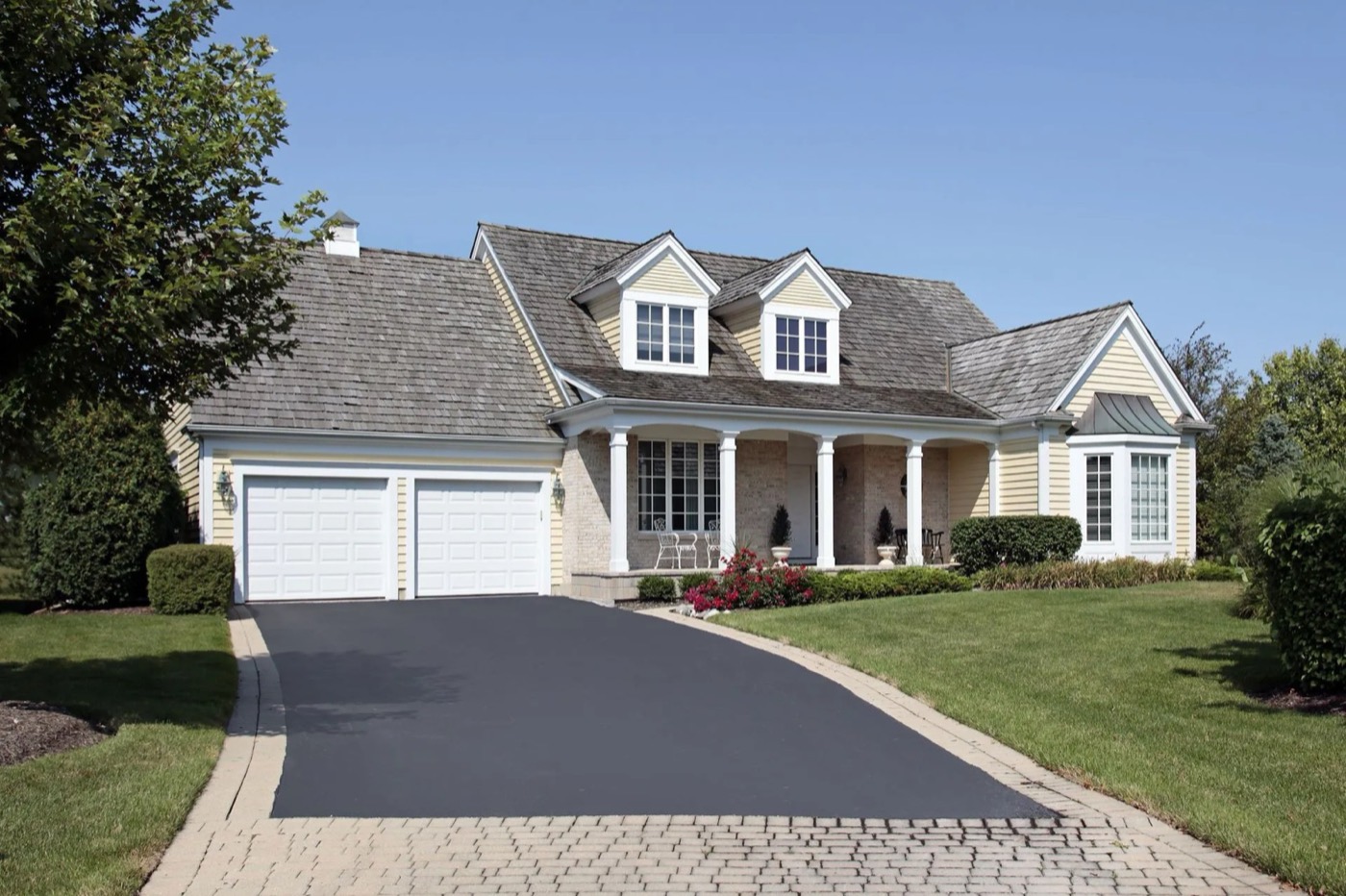
Highland Park driveways deal with a little of everything: heavy tree cover on many streets, homes set along ravines and bluffs, cool damp springs near the lake, and a long winter of plowing and road salt. All of it wears on asphalt. Residential driveway sealcoating is the routine maintenance that keeps that wear from turning into cracks and costly repairs.
This guide covers what sealcoating does for a Highland Park driveway, the local conditions worth planning around, what good preparation looks like, and how to tell whether your driveway needs sealing or repair first.
What sealcoating does for your asphalt
Asphalt is stone held together by a binder. Sun dries that binder out, water soaks into the surface, and every freeze-thaw cycle pushes small openings wider. A sealcoat is a thin protective layer that slows all three. It fills the pores in the surface so water runs off, resists oil and gas drips, and blocks the UV light that turns a black driveway gray and brittle.
Sealcoating is maintenance, not a repair. It protects asphalt that's still in reasonable shape, which is why timing matters more than anything else.
Local conditions that affect Highland Park driveways
Shade from mature trees
Many Highland Park lots have large, mature trees over the driveway. Shade keeps the surface damper, slows drying after rain and lets leaves, sap and seed pods stain the asphalt. Shaded sections are also the last to dry after sealing, so they need a dry, warm day and a little extra cure time before cars go back on.
Slopes and curves
Homes near the ravines and bluffs often have sloped or curving driveways. On a slope, water runs fast and carries grit with it, which wears the surface faster at the bottom and along the edges. Sealer on a slope has to be applied evenly so it doesn't puddle at the low end, and the edges need careful hand work.
Lake weather and salt
Spring can stay cool longer close to the lake, which shortens the early part of the sealing season. Winters bring repeated freeze-thaw cycles and plenty of road salt tracked in from the street. A driveway that goes into winter with an intact coat sheds that salty water instead of absorbing it.
What proper preparation looks like
The sealer is only as good as the surface under it. Before anything is applied, the driveway should be:
- Edged so grass and soil are cut back from the borders and the coating reaches the real edge of the asphalt.
- Cleaned of dirt, leaves and debris, which is especially important under trees.
- Treated for oil spots so the new coat bonds instead of peeling where cars park.
We include edging, cleaning and oil spot treatment in every job. Skipping them is the most common reason a sealcoat looks good for a month and then wears unevenly. Our guide to getting ready for sealcoating day covers what you'll want to do on your end.
When to sealcoat in Highland Park
Sealer needs dry pavement, temperatures of at least 50°F and rising, and no rain for about 24 hours, along with whatever limits the product manufacturer sets. In the Chicago area that usually means late spring through early fall. Early fall is a particularly good time, because the driveway goes into salt season with a fresh, fully cured coat. More detail is in the best time of year to sealcoat in Illinois.
Most driveways do best with a fresh coat every two to three years. Sealing every year can build up a thick film that cracks and peels.
When a driveway needs repair before sealing
Sealer covers fine hairline cracks, but it can't fix wide cracks, potholes, sunken areas or alligator cracking, a web of connected cracks that usually means the base is weakening. Those need repair first. We only do sealcoating, so if your driveway is past the point where sealing helps, we'll tell you in your estimate. Can you sealcoat over driveway cracks? explains the difference in more detail.
What sealcoating costs
Most residential driveway sealcoating projects range from $250–$550. Your final price depends on driveway size, surface condition, preparation, and any additional repairs needed. Request a free estimate for pricing specific to your driveway.
We measure your driveway by satellite, so you don't need to schedule a visit. A team member reviews every estimate before it's sent.