
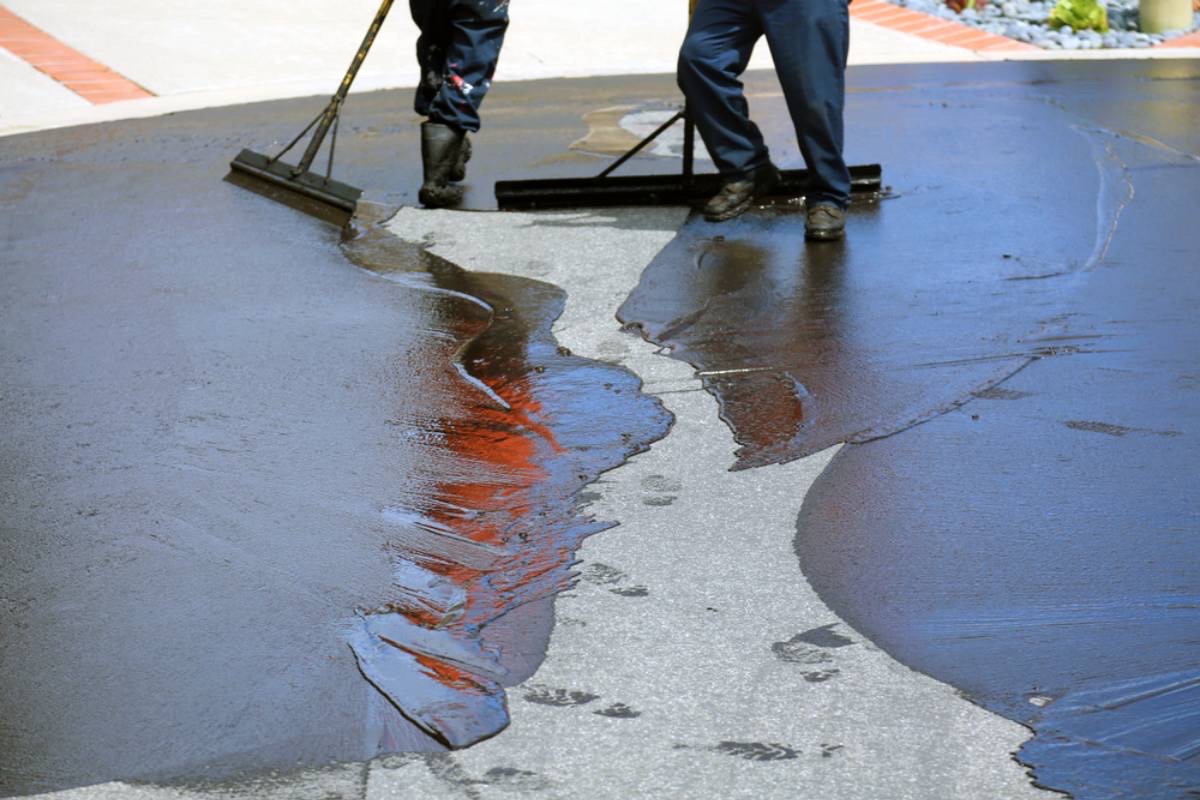
Many Lake Forest homes sit on larger lots with longer driveways, wide turnarounds and finished borders of brick, stone or landscaping. Those driveways are a big part of how a property looks from the street, and they take more wear than most homeowners expect: delivery trucks, landscaping crews, snow plows and a lot of road salt.
Here's what to know about driveway sealcoating on a Lake Forest property, from protecting the details around the asphalt to planning the job around a busy household.
Why longer driveways wear unevenly
A long driveway rarely wears the same from end to end. The section near the street takes the most salt and plow damage. The area in front of the garage gets turning tires and oil drips. Stretches under trees stay damp and collect leaves, while open, sunny sections fade fastest. Sealcoating every two to three years evens that out by putting a uniform protective layer over the whole surface before any one area breaks down.
If one section is clearly worse than the rest, that's worth pointing out when you request an estimate. It may need extra cleaning, or in some cases a repair before sealing.
Protecting borders, aprons and landscaping
Driveways bordered by brick pavers, Belgian block, stone or concrete aprons need careful edge work. Sealer is meant for asphalt only, and it stains masonry and concrete if it gets on them. Good practice includes:
- Edging the asphalt cleanly so the coating stops at a crisp line.
- Cutting in along borders by hand rather than spraying up to them.
- Keeping sealer off garage floors, walkways and the street apron.
- Working around irrigation heads, lighting and planting beds.
Before the job, it helps to note any border or feature you're particular about. A careful crew would rather know up front.
Planning around landscapers, irrigation and deliveries
Larger properties often have regular service visits. For a smooth sealcoating day:
- Turn off irrigation for 24 hours before and after the job, including any zones that spray onto the driveway.
- Let your landscaping crew know the date so mowers, blowers and trailers stay off the fresh coat.
- Hold deliveries or have them left at the street for about two days.
- Move every vehicle off the driveway before work starts.
In warm, dry weather most driveways are ready for foot traffic after about 24 hours and for cars after about 48. Shade, humidity and cooler temperatures stretch that, and so can the sealer manufacturer's instructions. See how long after sealcoating you can park for the full timeline.
Leaves, sap and fall timing
Tree-lined driveways collect leaves, seed pods and sap, all of which can leave marks if they sit on the asphalt. Clearing debris regularly through the fall helps the coating last. Early fall is a smart time to seal, before leaves come down heavily and before salt season, as long as temperatures stay at 50°F and rising for the application and cure.
Sealing, repair or resurfacing?
Sealcoating protects a driveway that's still structurally sound. If you're seeing widespread alligator cracking, sinking sections or potholes that keep returning, the driveway likely needs repair or resurfacing by a paving contractor first. Our article on driveway sealing vs. asphalt resurfacing walks through how to tell the difference. We'll give you an honest answer in your estimate.
Pricing for Lake Forest driveways
Most residential driveway sealcoating projects range from $250–$550. Your final price depends on driveway size, surface condition, preparation, and any additional repairs needed. Request a free estimate for pricing specific to your driveway.
Because longer and wider driveways take more material and time, size is usually the biggest factor in the final number. We measure by satellite, so you get an accurate written estimate without anyone needing to come out first.