
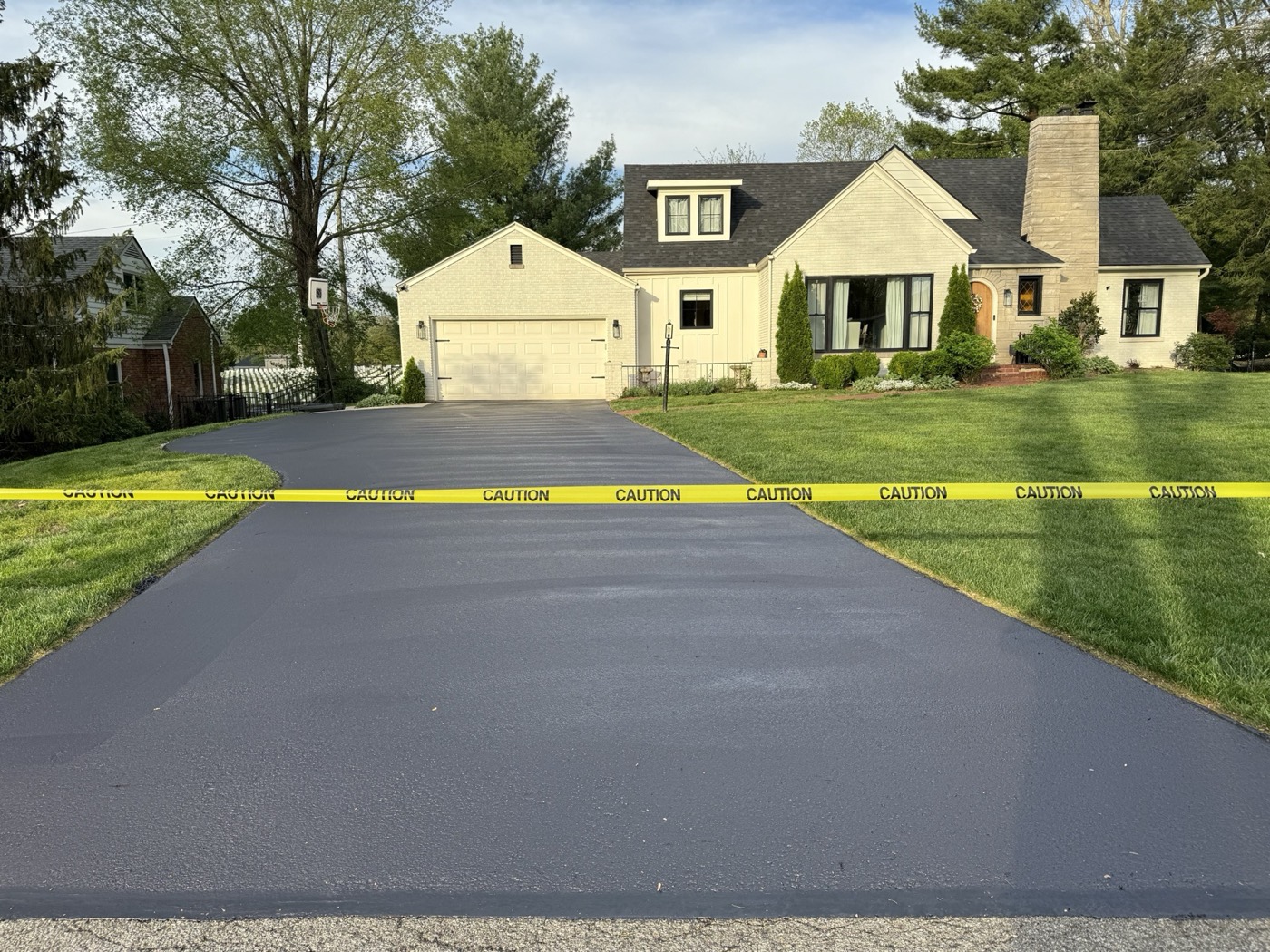
A freshly sealed driveway looks fantastic, and it's tempting to pull the car right back onto it the same afternoon. Waiting a little longer is what keeps it looking that way. Asphalt driveway sealing only protects your blacktop if the coating is allowed to dry and cure fully, and the first two days after the job matter more than most homeowners realize.
This guide walks through the timeline after residential driveway sealcoating: when you can walk on it, when you can drive and park on it, what slows drying down, how to treat your driveway during the first week, and what to do about tire marks. If you're planning around a busy household, a party or a moving truck, this is the schedule to plan around.
The sealcoating timeline at a glance
- First 4 to 8 hours: Keep everyone off it, including pets. The surface can look dry on top well before it has set underneath.
- After 24 hours: Light foot traffic is usually fine.
- After 48 hours: You can drive and park on it.
- First week: Avoid turning your steering wheel while the car is standing still, and keep heavy vehicles like moving trucks, dumpsters and landscaping trailers off it if you can.
These are typical times for warm, dry weather. On cooler or more humid days, give it extra time. Your driveway sealcoating contractor should tell you what to expect before they leave, based on the weather that day and how the driveway is sitting in sun or shade.
Why 48 hours? Drying vs. curing
Asphalt sealer dries in two stages. First, the water in the sealer evaporates. That's when the surface turns from a brownish color to black and starts to look dry. Then the sealer cures, which means it hardens and bonds to the asphalt underneath. A driveway can look finished long before the second stage is complete.
Driving on a blacktop driveway before the coating has cured can leave tire marks and scuffs, pull sealer up in spots where wheels turn, and track sealer onto your garage floor, sidewalk or concrete apron. Giving it the full 48 hours is the easiest way to protect the finish you just paid for and make sure the coat lasts its full two to three years.
What slows sealer drying down
- Cool temperatures. Sealer needs warmth. Below about 50°F, curing slows down a lot, which is why sealcoating is a late-spring-through-early-fall job in Illinois.
- Humidity and shade. Damp air and shady sections under trees take longer to dry than open, sunny areas.
- Thick application. One heavy coat takes longer to cure than two thin ones, which is one reason we apply thin coats.
- Sprinklers or rain. Water on uncured sealer can wash it out or leave a blotchy finish.
On a hot, sunny day your driveway may be ready a little sooner. On a cool or cloudy day, it can take longer than 48 hours before it's ready for parking. If part of your driveway sits in heavy shade, that section is usually the last to cure, so it's the spot to check before you drive on it.
How to care for your driveway in the first week
- Turn off sprinklers for at least 24 hours before and after the job.
- Move cars off the driveway before work starts. If you'll need a car in the next two days, park it on the street, not in the garage.
- Keep pets and kids off the surface until it's dry to the touch.
- When you do drive on it, roll straight in and out and avoid sharp turns for a few days.
- Avoid parking in the exact same spot for long periods during the first week, especially on hot days.
Most of these come down to one idea: give the new driveway coating time to harden before it takes any twisting or heavy weight. Power-steering turns while a car is parked are the most common cause of scuffs on a fresh coat, because the tires grind in place against a surface that's still soft.
Tire marks, scuffs and when your driveway looks its best
Light tire marks on a new coat are common, especially where cars turn into the garage on hot days. They usually fade within a few weeks as the sealer finishes curing and weathers slightly. They are a cosmetic issue, not a sign that the sealcoating failed, and they don't affect how well the coating protects the asphalt.
Your blacktop driveway will look its best about a week after the job, once the coating has fully hardened and any small marks have started to blend in. If you're sealing ahead of a graduation party, listing photos or another event, schedule the work at least a week ahead so the finish has time to settle. A local sealcoating company that knows North Shore weather can help you pick a date that leaves enough time.