
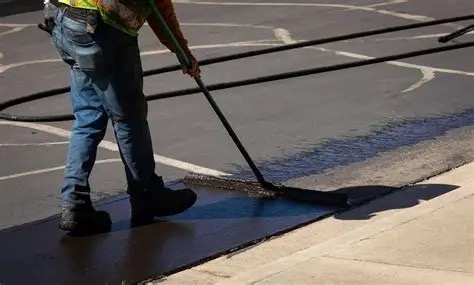
Every two to three years. That's the right interval for most residential asphalt driveways in northern Illinois. Sealing more often than that doesn't add protection. It builds up layers that crack, flake and peel.
Where your driveway falls in that range depends on sun, traffic, snow plowing and how well the last coat was applied. Here's how to tell.
Why 2 to 3 years
A sealcoat wears gradually. Sun breaks it down, tires grind it, and plows scrape it. After two to three years, most of the coat has worn thin on the high-traffic areas while the asphalt underneath is still in good shape. That's the moment to reseal: the surface is protected again before the binder starts drying out.
The danger of over-sealing
Sealer sits on top of the asphalt. When new coats go on before the old ones have worn away, they stack into a thick film, especially along edges and near the garage, where cars rarely drive.
Once a driveway is peeling, the loose layers have to come off before a new coat will bond. That's more work and more cost than simply waiting another year.
What shortens the schedule
| Factor | Effect |
|---|---|
| Full sun, south or west facing | Faster fading. Lean toward 2 years. |
| Heavy daily traffic | Faster wear by the garage and street. |
| Snow plow service | Blade abrasion wears coating faster. |
| Lots of road salt | More freeze-thaw stress on the surface. |
| Shaded, light use | Slower wear. Lean toward 3 years. |
Freeze-thaw and lake-effect winters
Northern Illinois winters swing above and below freezing again and again. Every cycle, water in the surface freezes, expands and pushes openings wider. Near the lake, damp air and salty slush keep the surface wet for long stretches. A coat that's worn through can't keep that water out, which is why the schedule matters.
Check before you book
- Hose test. If water beads, the coat is still working. If it soaks in, it's time.
- Color. Gray patches on the high-traffic areas mean the coat has worn thin.
- Texture. Loose grit and exposed stone mean the binder is drying.
- Cracks. New hairline cracks are a signal to seal soon.
New driveways
Let fresh asphalt cure first, typically six months to a year. Your paver can tell you when. After the first coat, the two-to-three-year schedule takes over.
How long does a sealcoat last?
A properly applied coat usually protects a residential driveway for about two to three years. Coats wear faster where tires turn, at the street end where plows hit, and in full sun. They last longer on shaded, lightly used driveways. That's why the hose test and a quick look each spring are better guides than the calendar alone.
A simple way to stay on schedule
- Write down the month and year of each coat.
- Check the driveway every spring after the snow melts.
- Reseal when the coat has worn thin, usually two to three years.
- Repair wide cracks before the next coat.
We'll tell you if it's not time
If your driveway doesn't need sealing yet, we'll say so. Every sealcoating job we do includes edging, cleaning and oil spot treatment. Most residential driveway sealcoating projects range from $250–$550. Your final price depends on driveway size, surface condition, preparation, and any additional repairs needed. Request a free estimate for pricing specific to your driveway.