
Driveway sealing and asphalt resurfacing both make a tired driveway look better, so homeowners often mix them up. They're different jobs that solve different problems, and the price gap between them is large. Knowing which one your driveway needs keeps you from paying for more work than necessary, or from putting a cosmetic fix on a problem that really needs a repair.
In this guide we break down what each service actually is, when a driveway is past both and needs full replacement, how to tell which category yours falls into, and why regular blacktop driveway sealing is the thing that keeps resurfacing off your to-do list for as long as possible.
What driveway sealcoating is
Driveway sealcoating is a protective coating applied over your existing asphalt. It doesn't add structural strength or thickness. Its job is to shield the surface from the things that break asphalt down: water, oil and gas, road salt and sunlight. UV light dries out the binder that holds the stone together, and water that soaks in freezes and expands every winter. A good coat of sealer slows both down.
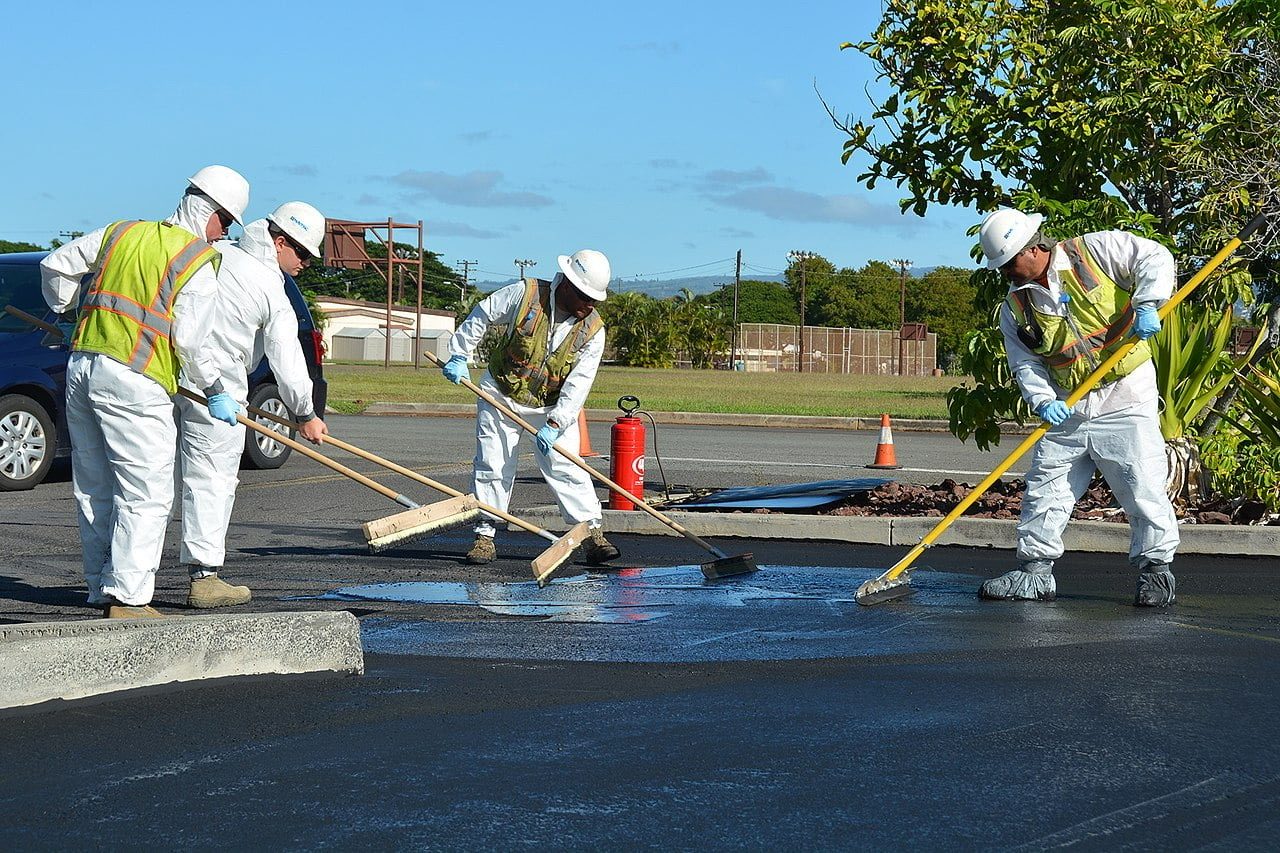
A typical residential driveway sealcoating job includes edging, cleaning the surface, treating oil spots and applying thin coats of sealer. It's done in a day, and the driveway is ready to drive on in about 48 hours. Think of it like staining a deck before the wood starts to rot: it's routine maintenance that keeps a much bigger expense away.
What asphalt resurfacing is
Resurfacing, also called an overlay, means paving a new layer of hot asphalt over the old driveway, usually after the worst areas have been patched or ground down. It's a repair for driveways where the top surface has broken down across large areas but the base underneath is still solid and well drained.
Resurfacing costs considerably more than sealing, requires paving equipment and a paving crew, and takes the driveway out of use for longer. The new asphalt also needs months to cure before it can be sealed for the first time. It's the right call when the surface is truly worn out, but it isn't something you want to do sooner than you have to.
When full replacement makes more sense
If the base under the asphalt has failed, an overlay won't last. New asphalt laid over a soft or shifting base will crack in the same places the old surface did, sometimes within a season or two. Signs of base failure include sinking or settled sections, large potholes that keep coming back after they're patched, and asphalt breaking apart into chunks.
In that case, the driveway needs to be torn out and rebuilt from the base up. That's the most expensive option by far, which is exactly why catching problems early matters. Most driveways that end up needing replacement went years without maintenance, letting water get into the base through open cracks.
How to tell which one your driveway needs
Sealcoating is likely the right call if:
- The surface has faded to gray but is still mostly intact.
- Cracks are hairline or narrow and not connected into a web.
- There's no sinking and no large holes.
- Oil stains are present but the asphalt under them is still firm.
Resurfacing or replacement may be needed if:
- Cracks connect into a pattern that looks like alligator skin across large areas.
- There are potholes or crumbling edges.
- Water pools in low spots after it rains.
- The asphalt shifts, flexes or breaks apart when you drive on it.
Many driveways fall in between: mostly sound, with one or two damaged spots. Those can often be patched in the problem areas and then sealed, which costs far less than resurfacing the whole thing.
Why sealcoating now delays resurfacing later
Sealing a driveway while it's still in good shape is what delays resurfacing. Every year the surface stays protected is a year water, salt and sun aren't breaking it down, and a year you're not paying for new asphalt. Asphalt driveway sealing every two to three years is the cheapest insurance a blacktop driveway can get.
Once a driveway is too far gone, though, sealer won't bring it back. It can make a failing driveway look black again for a little while, but it won't fix the structure underneath. That's why an honest driveway sealcoating contractor will tell you in the quote if your driveway is past the point where sealing makes sense, instead of sealing over a problem and taking your money.