
Chicago-area winters mean salt on the roads, the sidewalks and probably your driveway. It keeps everyone from slipping, but it's also a big part of the reason driveways here wear out faster than they do in milder climates. If your blacktop driveway looks grayer and rougher every spring, winter is usually the culprit.
The good news is that most winter damage is preventable. In this guide we explain how road salt actually affects asphalt, why freeze-thaw cycles do the real damage, how plowing and shoveling add wear, how blacktop driveway sealing protects the surface, and a few simple habits that help your driveway get through the season in better shape.
Salt turns ice into water, and water is the problem
Salt works by lowering the freezing point of water, turning ice and snow into slush and liquid. On a sidewalk that's exactly what you want. On asphalt, that water soaks into the small pores and hairline cracks in the surface. An unsealed or worn driveway is porous enough that salty water can work its way well below the top layer.
Salty slush also stays on a driveway longer than plain snow, and more of it gets carried in from the street on your tires every time you pull in. A driveway that stays wet for most of the winter gives water far more chances to get into the asphalt, especially along the apron where street salt collects and in the tire paths where cars park.
Freeze-thaw cycles do the real damage
When the temperature drops overnight, the water that soaked into the asphalt refreezes and expands. That expansion pushes the surface apart from the inside. When it thaws the next afternoon, more water gets in, and the next freeze pushes a little harder. Repeat that dozens of times over a winter and the surface loosens, small cracks get wider and stones start coming loose.
Northern Illinois sees a lot of those cycles, especially in late fall and early spring when temperatures hover around freezing. That's why a driveway can look fine in November and show new cracks, loose stone and rough patches by March. The damage builds slowly over the winter, then shows up all at once when the snow melts.
Plowing and shoveling add wear
Plow blades and shovels scrape the surface every time they pass, especially along the edges, at the end of the driveway and on the apron by the street. Metal blades are the hardest on asphalt, and a plow set too low can catch on raised cracks and edges and break off pieces of the surface.
Combined with salt and water, that scraping wears through whatever protective coating is left. Driveways that are plowed by a service all winter tend to show the most wear at the corners where the plow turns and along the sides where snow gets piled up. Those are good spots to check every spring.
How driveway sealcoating protects against salt
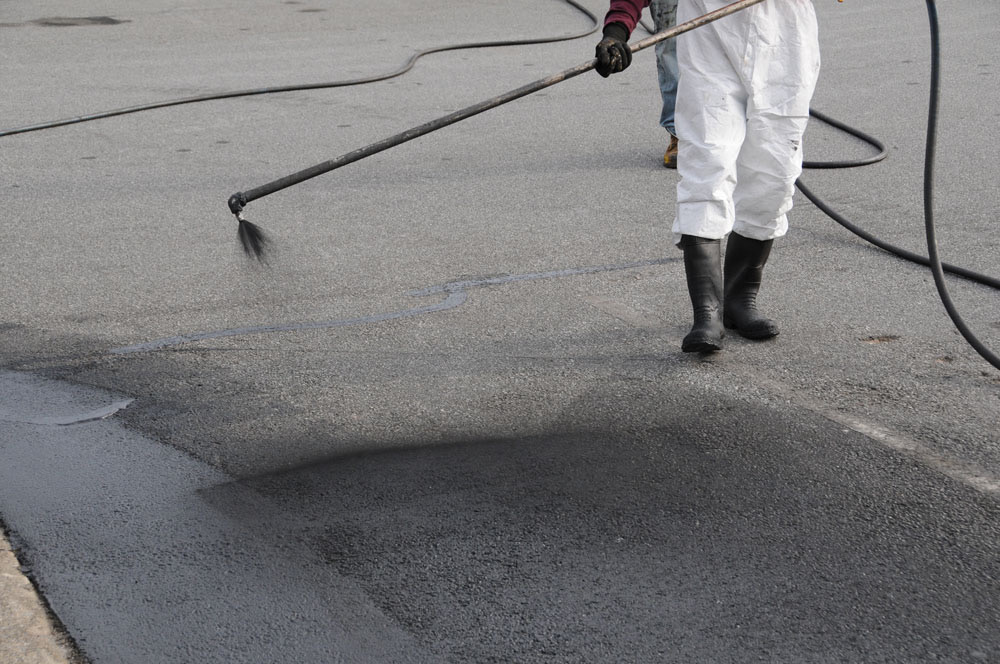
A fresh sealcoat fills the small pores in the asphalt and creates a surface that sheds water instead of letting it soak in. Less water in the asphalt means less freezing and expanding inside it, which is what keeps the surface tight and the stone locked in place. The coating also takes the brunt of the scraping and salt exposure so the asphalt underneath doesn't have to.
Sealing before small cracks have a chance to form and spread helps keep water away from the base, which is where freeze-thaw causes the most serious damage. A driveway sealed in late summer or early fall goes into salt season with fresh, fully cured protection. Residential driveway sealcoating every two to three years is the simplest way to keep winter from shortening the life of your driveway.
Winter care tips for your driveway
- Shovel or plow early, before snow gets packed down into ice.
- Use salt where you need it, like walkways, steps and slopes, instead of covering the whole driveway heavily.
- On very cold days, sand adds traction without melting anything.
- Use a plastic shovel blade, or keep metal edges from digging into the surface.
- If you hire a plow service, ask them to keep the blade raised slightly and mark your driveway edges.
- Seal in late summer or early fall so the coat is fully cured before the first snow.
Once the snow melts, take a walk down your driveway. New cracks, loose stone or faded patches are signs winter took a toll, and spring is the right time to have the driveway looked at before the damage grows. A local sealcoating company can tell you whether the damage is cosmetic or something that needs attention before next winter.