
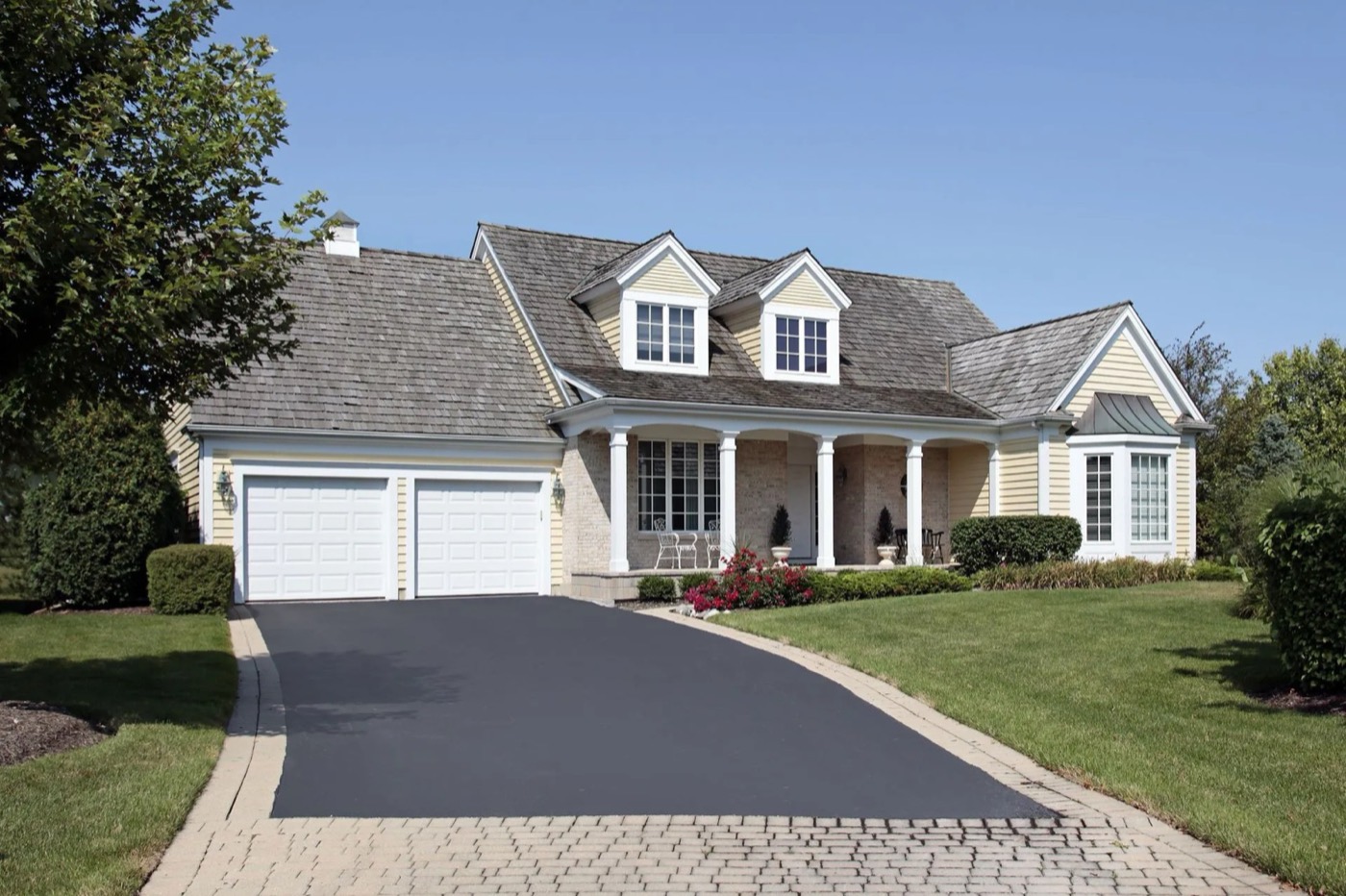
If your Wilmette driveway was paved in the last year or two, wait until the asphalt has cured, usually six months to a year, then seal it before it starts to fade. Sealing too early can trap oils in the new pavement and leave it soft. Waiting too long lets sun and salt start drying out the binder.
Why new asphalt needs time
Fresh asphalt is still releasing oils for months after it's laid. Those oils are what make new pavement look deep black and feel slightly soft on hot days. A sealcoat applied over them can stay tacky and scuff easily. Your paving contractor is the best source for exact timing, since it depends on their mix and when the work was done.
Signs a newer driveway is ready
- The color has shifted from deep black toward charcoal.
- Water no longer beads as tightly on the surface.
- It's been through at least one full season of weather.
The first coat sets the pattern
The first sealcoat on a driveway that's still in great shape is the easiest one to get right. Prep is light, the surface is tight, and the coat bonds well. After that, a fresh coat every two to three years keeps it protected. Sealing every year builds up a thick film that can peel. More on that in how often you should sealcoat.
Coal tar is off the table in Wilmette
Wilmette is one of several North Shore communities that prohibit coal tar pavement sealants, and suburban Cook County passed its own ban in 2024. Ask any contractor what product they use. Asphalt-emulsion sealer is the standard choice. Our coal tar vs. asphalt emulsion guide explains why.
What happens if you wait too long
New asphalt looks great for a couple of years, so it's easy to forget about it. By the time a driveway looks gray, the binder on the surface has already started drying out. Fine stone loosens, water starts soaking in, and the first freeze-thaw cracks appear. Sealing a year or two after paving, then every two to three years, keeps the surface tight and flexible longer.
| Timing | What to expect |
|---|---|
| Sealed too early | Coat can stay soft, scuff and track on hot days. |
| Sealed on time | Light prep, strong bond, surface stays black and tight. |
| Sealed late | More prep, visible hairline cracks, coat still helps but can't reverse wear. |
Protecting a new driveway in the meantime
- Avoid turning the steering wheel while the car is stopped, especially on hot days.
- Keep heavy trucks and dumpsters off soft new asphalt.
- Clean up oil and gas drips quickly.
- Use plastic shovels and ask plow services to keep the blade raised.
Prep, timing and price
Every residential sealcoating job we do includes edging, cleaning and oil spot treatment. The season runs late spring through early fall. Most residential driveway sealcoating projects range from $250–$550. Your final price depends on driveway size, surface condition, preparation, and any additional repairs needed. Request a free estimate for pricing specific to your driveway.