
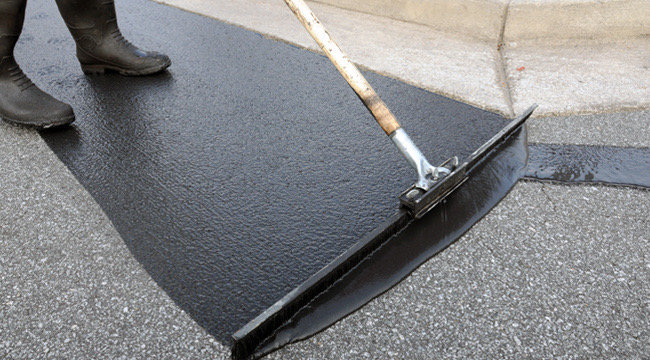
Coal tar sealants contain high levels of polycyclic aromatic hydrocarbons (PAHs), which the National Toxicology Program classifies as a human carcinogen. As the sealant wears, particles are tracked into homes and washed into storm drains and waterways. That's why a growing list of North Shore communities, and suburban Cook County, have banned it. Asphalt-emulsion sealer is the safe, legal standard.
Where coal tar is banned near the North Shore
- Highland Park voted to ban the sale and use of coal tar products in 2017.
- Deerfield banned the use and sale of coal tar sealants in 2018.
- Winnetka, Wilmette, Evanston, Vernon Hills and Riverwoods also prohibit it.
- Suburban Cook County passed a countywide ban on coal tar and other high-PAH sealants in 2024.
- Lake Forest's City Council considered a coal tar prohibition in March 2026. Check the City Code for its current status.
Ordinances change, so confirm the rules for your address with your village or city. Some ordinances also cover high-PAH products that aren't labeled "coal tar."
The difference in one table
| Coal tar sealer | Asphalt-emulsion sealer | |
|---|---|---|
| Base | Refined coal tar pitch | Asphalt (petroleum) emulsified in water |
| PAH content | Very high | Far lower |
| Odor | Strong, lingering | Mild |
| Handling | Can irritate skin and eyes | Gentler to work with |
| Legal on the North Shore | Banned in many communities | Yes |
Runoff and local waterways
Sealer wears off as fine particles. Rain carries them into storm drains, ravines and streams. On the North Shore, that means waterways like the Skokie River and the ravines that drain toward Lake Michigan. PAHs build up in stream sediment, which is a major reason communities acted.
Does emulsion hold up as well?
Coal tar has historically been marketed as more resistant to gas and oil. A quality asphalt-emulsion sealer, applied over a properly cleaned surface with oil spots treated, protects a residential driveway well on a normal two-to-three-year schedule. Prep and application matter more than marketing claims.
How to protect yourself
- Ask every contractor what product they use, and get it in writing.
- Be cautious with door-to-door crews offering cheap, unlabeled material.
- Don't buy coal tar products for DIY use where they're banned.
Why PAHs are a concern at home
Studies cited by public health agencies have found that sealcoat particles worn off driveways can be tracked indoors on shoes, where they end up in house dust. Children, who spend more time on floors, are more exposed. That's one of the reasons health departments, including the Illinois Department of Public Health, publish guidance on coal tar sealants.
How to tell what's on your driveway now
It's hard to tell by looking. Coal tar coatings often have a strong, tar-like smell when fresh and may have been applied by contractors years ago. If you're not sure, ask whoever sealed it last. Either way, your next coat should be a product that meets your town's rules.
Disclosure in Illinois
Illinois has a Coal Tar Sealant Disclosure Act that covers how these products are identified. Combined with local bans, the practical result is simple: on the North Shore, asphalt emulsion is the product to ask for.
Planning your sealcoat
Ask us, or any contractor you're considering, exactly which sealer will be used. Every sealcoating job we do includes edging, cleaning and oil spot treatment. Most residential driveway sealcoating projects range from $250–$550. Your final price depends on driveway size, surface condition, preparation, and any additional repairs needed. Request a free estimate for pricing specific to your driveway.