
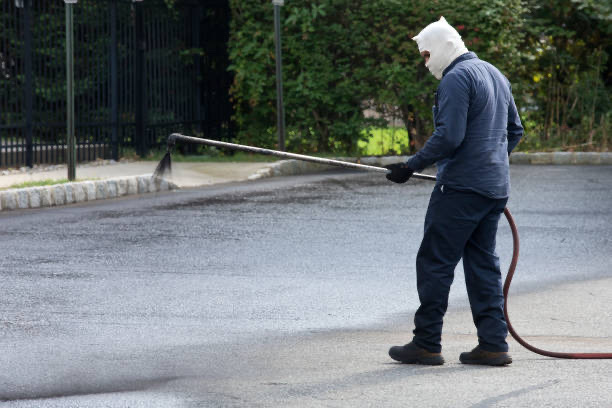
If your driveway has open cracks wider than a hairline, fill them first, then seal. Sealcoat coats the surface but doesn't fill cracks. If the driveway only has fine hairline cracks, sealing alone is usually the right next step.
Setting priorities
| What you see | Do this first |
|---|---|
| Faded color, fine hairline cracks | Sealcoat |
| Open cracks you can see into | Crack filling, then sealcoat |
| Web-like alligator cracking | Repair the area, then sealcoat |
| Potholes or sinking | Patch or resurface first |
Why sealer isn't a crack filler
Sealer is a thin liquid. Poured into a crack, it shrinks as it dries and leaves the crack open underneath, where winter water freezes and widens it. Read more in can you seal a driveway with cracks?
Our role
We only do sealcoating. If your driveway needs crack filling or patching first, we'll say so in your estimate so you can have it handled before sealing.
Cook County coal tar ban
Suburban Cook County, including Wheeling, banned coal tar and high-PAH sealants in 2024. See coal tar vs. asphalt emulsion.
Why order matters
Crack filler needs to cure before sealer goes over it. Sealing first and filling later leaves filler sitting on top of the coat, where it looks patchy and doesn't bond as well. Filling first, then sealing, gives an even look and puts the protective coat over the repaired cracks.
Working with a limited budget
If you can only do one thing this year:
- Open cracks first. They let water into the base, which leads to the most expensive damage.
- Then seal. Sealing protects the whole surface from sun, water and salt.
- Then keep the schedule. Reseal every two to three years.
A driveway with no open cracks and only faded color is the easiest case: sealing alone is the right call.
Price
Most residential driveway sealcoating projects range from $250–$550. Your final price depends on driveway size, surface condition, preparation, and any additional repairs needed. Request a free estimate for pricing specific to your driveway.