
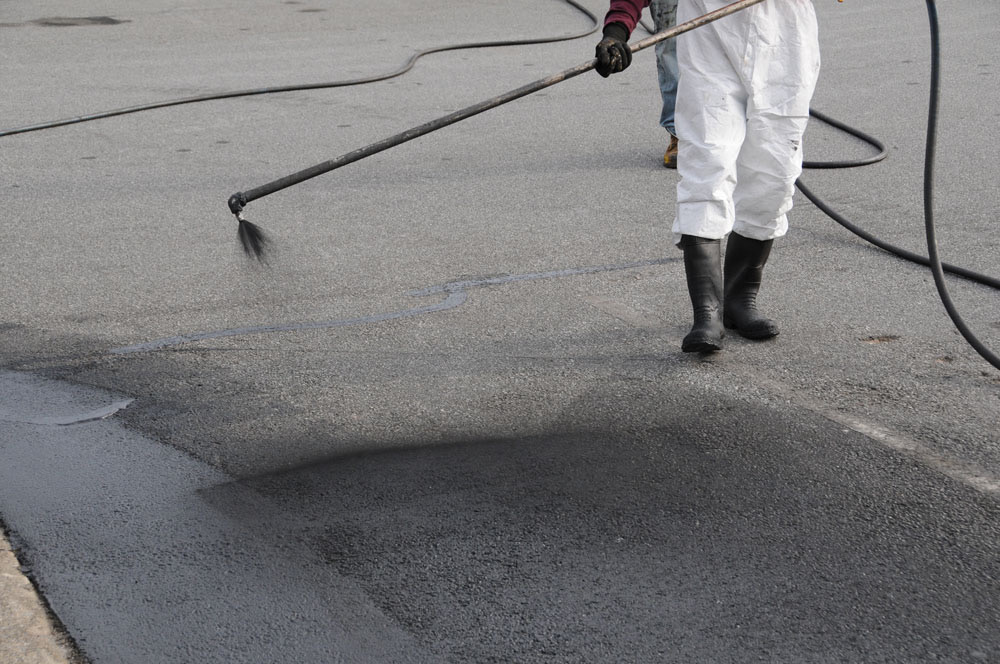
Where a driveway meets lawn or a drainage swale instead of a curb, the edge is usually the first part to fail. Sealing helps keep water out of the top of that edge, but it can't fix a driveway that holds water or sits too low. Here's how to tell what your driveway needs.
Why edges go first
An uncurbed edge has no support on the side. Runoff softens the soil next to it, tires drift onto it, and grass grows into it. The asphalt thins and crumbles. Cutting the grass back and sealing to the true edge protects it longer.
Drainage problems sealing can't solve
- Water pooling in low spots after rain.
- Water running toward the garage or house.
- Edges sitting below the lawn so runoff flows onto the driveway.
- Sinking near a ditch or swale.
Those are grading or repair problems. We'll point them out honestly in your estimate.
Prep for open-edged driveways
Every sealcoating job we do includes edging, cleaning and oil spot treatment. On open-edged driveways, edging matters most, so the sealer reaches the real asphalt instead of a layer of turf.
Timing and schedule
Late spring through early fall, on dry days of at least 50°F and rising. Plan on resealing every two to three years. More in how often to sealcoat.
Keeping edges healthy between coats
- Trim grass back from the edge regularly so water can run off.
- Avoid driving on the edges, especially with heavy trucks.
- Keep snow piles off the edges in winter.
- Watch for edges that start to break off and have them repaired early.
Signs it's time to seal
Use the hose test. If water soaks in, the surface has worn through. Gray color, loose grit and fine cracks near the edges are other signs. See 5 signs your driveway needs sealcoating.
Price
Most residential driveway sealcoating projects range from $250–$550. Your final price depends on driveway size, surface condition, preparation, and any additional repairs needed. Request a free estimate for pricing specific to your driveway.