
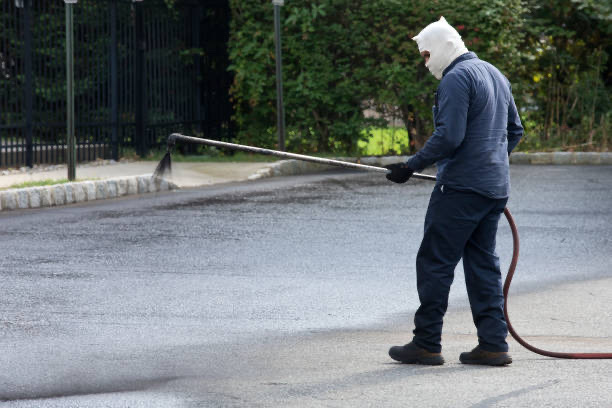
Many Evanston homes park off the alley, on a short apron or a parking pad in front of a detached garage. Those small asphalt areas take a surprising beating: alley runoff, garbage trucks, tight turns and road salt. Sealcoating them every two to three years keeps water out and slows cracking, just like a full driveway.
What makes alley pads different
- Runoff. Water from the alley and garage roof often flows across the pad. A sealed surface sheds it instead of absorbing it.
- Tight turns. Cars turning in from a narrow alley twist their tires in the same spot every day.
- Edges against the alley. The seam where your pad meets the alley pavement is a common place for cracks to start.
Check drainage first
If water pools against the garage door or in a low spot on the pad, sealing won't fix that. Sealer protects the surface but doesn't change the slope. Pooling, sinking and wide cracks need repair before sealing. We'll tell you honestly if that's the case.
Coal tar rules in Evanston
Evanston prohibits coal tar pavement sealants, and suburban Cook County passed a countywide ban in 2024. Asphalt-emulsion sealer is the standard. Read more in coal tar vs. asphalt emulsion.
Planning the job
Since alley parking can't easily be rerouted, plan for about 48 hours off the pad in warm, dry weather, and longer in shade or cool temperatures. Every sealcoating job we do includes edging, cleaning and oil spot treatment.
Front driveways and side drives
Not every Evanston home parks off the alley. Front driveways and long side drives along the house have their own wear patterns: runoff from the roof along the house wall, shaded stretches between homes, and tight clearances that make edge work along foundations and fences important. The same rules apply: clean thoroughly, treat oil spots, and keep sealer off masonry, siding and concrete.
A quick checklist before sealing
- Is water pooling anywhere after rain? That needs fixing first.
- Are there open cracks at the seam with the alley or garage slab?
- Are downspouts emptying onto the asphalt? Add extensions.
- Can every car be parked elsewhere for about two days?
For more on cracks, read can you seal a driveway with cracks?
Price
Most residential driveway sealcoating projects range from $250–$550. Your final price depends on driveway size, surface condition, preparation, and any additional repairs needed. Request a free estimate for pricing specific to your driveway. Small pads and aprons usually fall at the lower end because of their size.