
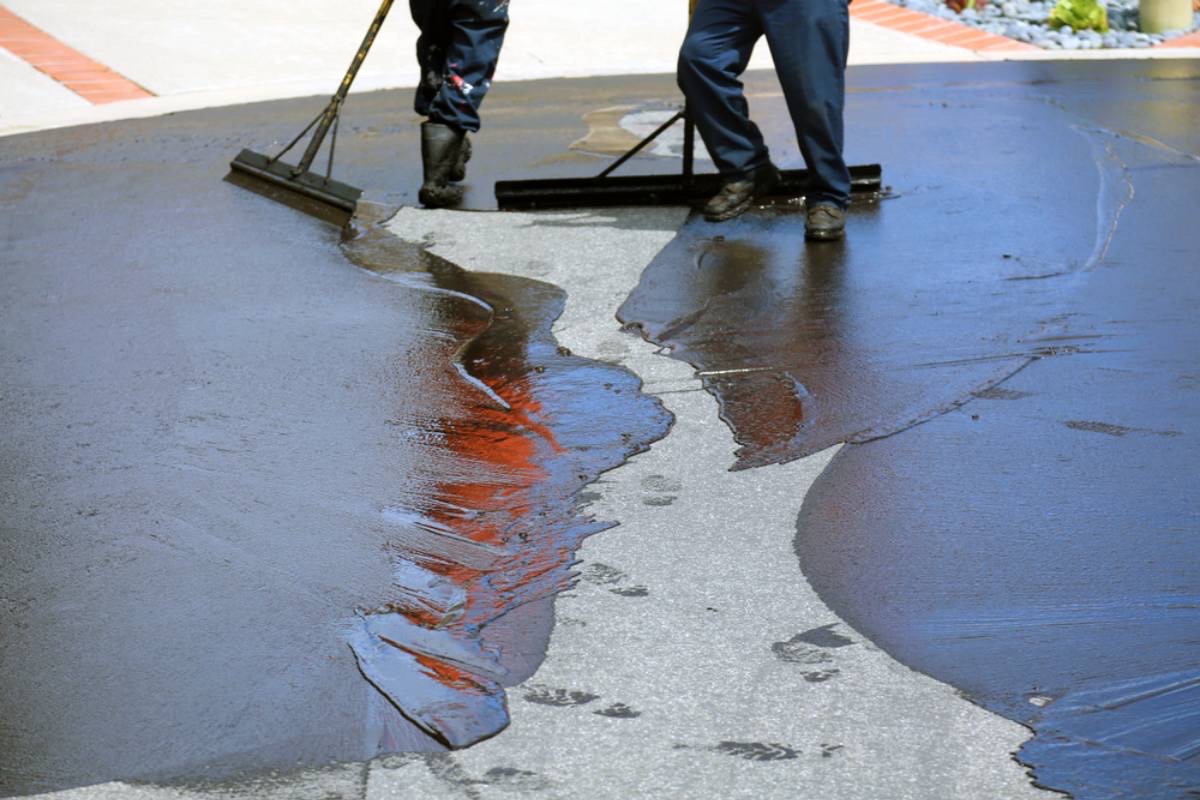
Many Bannockburn homes sit on wooded lots with long driveways that run straight into lawn or planting beds, with no curb along the sides. Those open edges are usually where an asphalt driveway starts to fail. Regular driveway sealcoating slows that down, as long as the edges get the same attention as the middle.
Why uncurbed edges break down first
Without a curb, the edge of the asphalt has nothing holding it in place. Water runs off the surface and softens the soil beside it, tires drift onto the edge, and grass roots push in. Over time the edge thins, cracks and crumbles. Sealing keeps water out of the top of that edge, which helps it hold together longer.
Edging is part of the job, not an extra
Before any sealer goes down, grass and soil should be cut back to the true edge of the asphalt. Sealing over a thin layer of turf leaves the real edge unprotected. Every job we do includes edging, cleaning and oil spot treatment.
Long drives under trees
Wooded lots mean leaves, seed pods and sap on the surface. All of it has to come off before sealing, or the coating won't bond. Heavily shaded stretches also dry slower, so they need a warm, dry day and extra cure time before cars return.
Signs your long driveway is due
- Graying or brown color on sunny stretches.
- Loose stone collecting where the drive meets the street.
- Edges that crumble when you step on them.
- Water soaking in instead of beading.
Crumbling or sunken edges need repair before sealing. We'll point them out honestly in your estimate.
Gravel aprons and transitions
Some long drives meet the street through a gravel apron, a concrete section or a change in pavement. Those transitions collect loose stone that gets tracked onto the asphalt and ground in by tires. Before sealing, the seams need to be swept clean so sealer bonds right up to the edge of the asphalt, and the coating should stop cleanly where the asphalt ends.
Plan the cure around the whole length
On a long drive, the sunny stretch near the street may be dry hours before the shaded section near the house. In warm, dry weather, most driveways can take foot traffic after about 24 hours and cars after about 48, but the slowest section sets the schedule. Check the shadiest stretch before driving on it.
- Park at the street or arrange parking elsewhere for about two days.
- Let delivery services and landscapers know the dates.
- Turn off irrigation that reaches the driveway for 24 hours before and after.
See how long after sealcoating you can park for the full timeline.
Timing and price
Seal between late spring and early fall on a dry day of at least 50°F and rising. Most residential driveway sealcoating projects range from $250–$550. Your final price depends on driveway size, surface condition, preparation, and any additional repairs needed. Request a free estimate for pricing specific to your driveway. Longer driveways take more material and time, so size is the biggest factor.