
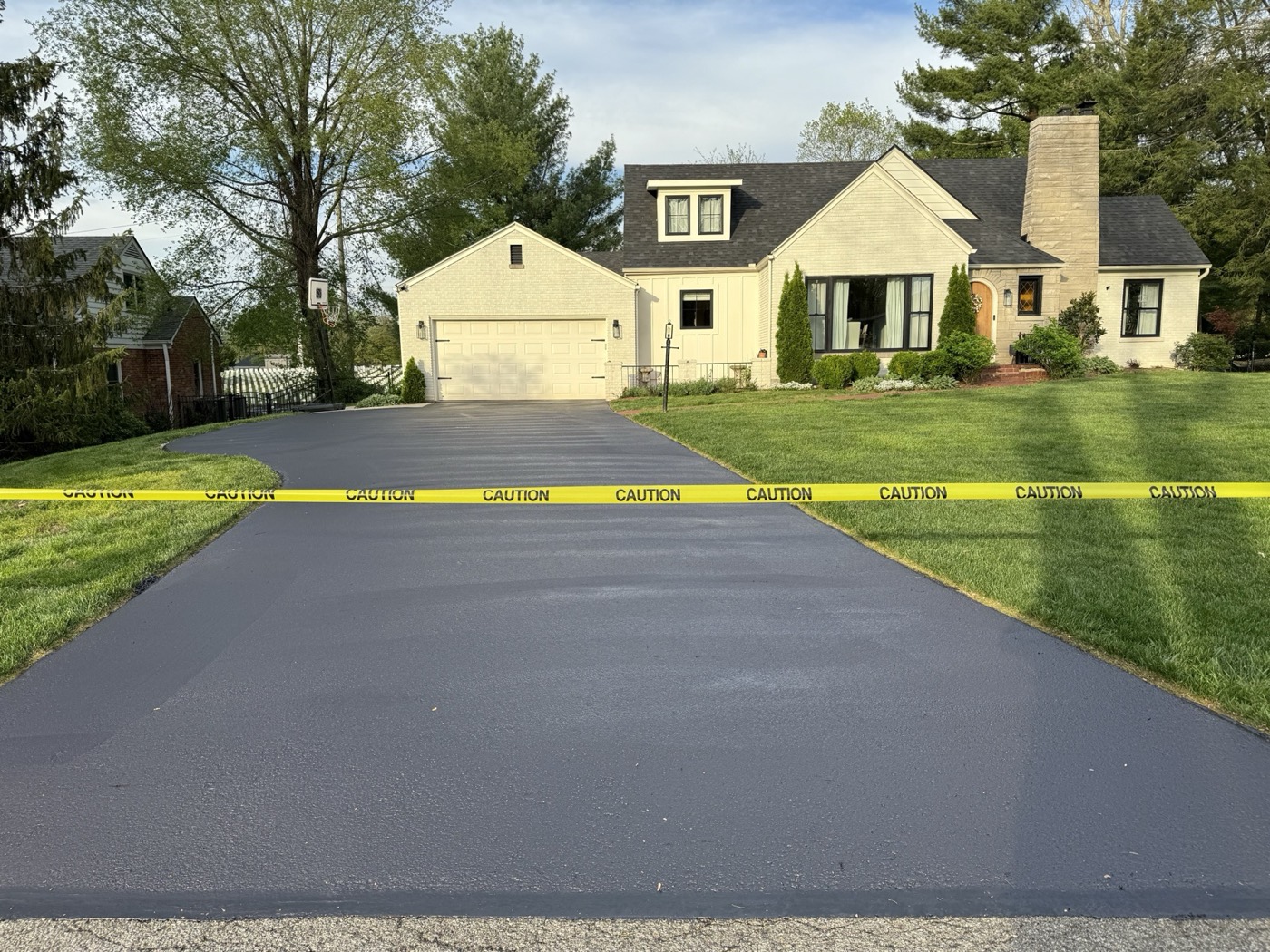
Tracking happens when shoes, tires or paws cross sealer before it has cured, carrying it onto garage floors, walkways and carpets. The fix is simple: give the coating its full cure time and plan your household's routes for the first two days.
How to avoid tracking
- Use a door that doesn't cross the driveway for 24 to 48 hours.
- Keep cars out of the garage until the driveway is ready for traffic.
- Keep pets off. Paw prints are the hardest to clean up.
- Put a mat at the door for the first week.
- Check the shadiest section before driving on it. It cures last.
Why weather matters
Sealer cures fastest on warm, dry, sunny days. Cool nights, humidity and shade slow it down. Sealing too late in the season is a common cause of tracking. See the best time to sealcoat.
Coal tar is banned in Vernon Hills
Vernon Hills is one of the Lake County communities that prohibit coal tar pavement sealants. Asphalt emulsion is the standard. Read coal tar vs. asphalt emulsion.
Prep
Every sealcoating job includes edging, cleaning and oil spot treatment, with careful edges along garage slabs and walkways.
If sealer does get tracked
- Concrete: deal with it quickly, before it cures. Wipe up what you can and ask your contractor for advice on cleanup.
- Floors and carpet: blot, don't rub, and use a cleaner safe for the surface.
- Shoes and paws: wipe off before going inside.
Prevention is much easier than cleanup, which is why the first 48 hours matter.
Garage floors and aprons
The seam between the driveway and the garage slab is where tracking starts. Careful edge work keeps sealer off the slab during the job. After that, keep the garage door closed or the cars parked outside until the driveway is ready.
Price
Most residential driveway sealcoating projects range from $250–$550. Your final price depends on driveway size, surface condition, preparation, and any additional repairs needed. Request a free estimate for pricing specific to your driveway.