
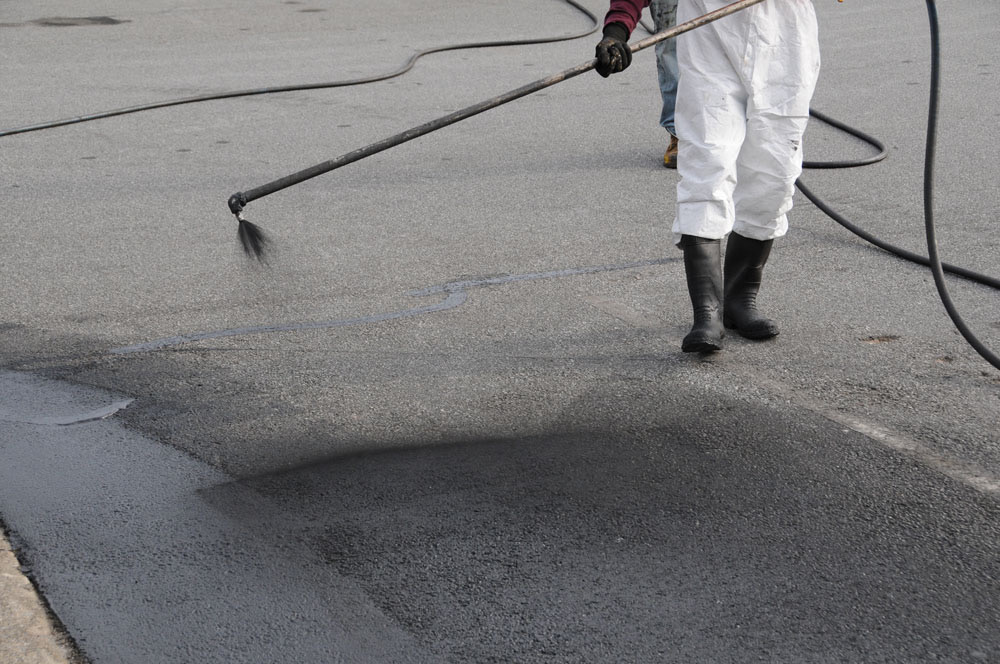
The best time to decide whether your driveway needs sealing is right after the snow melts. Winter damage is easy to see, and booking early gets you a better spot on the schedule. Here's a simple walk-through for Northfield homeowners.
The 10-minute spring walk
- Color. Has the surface faded to gray or brown?
- Edges. Are they cracking, crumbling or pulling away from the lawn?
- Street end. Is there loose stone or salt residue where plows hit?
- Garage end. Are oil stains bigger than last fall?
- Cracks. Are there new hairline cracks? Any wide ones you can see into?
- Water test. Spray a section with a hose. Does it bead or soak in?
Two or more yes answers usually means it's time to seal this year. Our list of signs your driveway needs sealcoating goes deeper.
Sort cracks into two groups
Thin, separate hairline cracks are a normal sign of aging, and sealing slows them down. Wide cracks, web-like alligator cracking, sinking and potholes need repair first. Sealer is a protective coating, not a filler. See can you seal a driveway with cracks?
Clean up the winter mess
Sweep away sand and salt residue, and rinse the surface. That alone makes the driveway easier to judge. Before sealing, we handle edging, full cleaning and oil spot treatment as part of every sealcoating job.
Don't seal on the first warm day
Sealer needs dry pavement, temperatures of at least 50°F and rising, and about 24 hours without rain. Early spring nights are often too cold. Late spring through early fall is the window, and booking in spring gets you on the calendar before it fills.
What to do with what you find
| Finding | Next step |
|---|---|
| Faded color, water soaks in | Sealcoat this season. |
| New hairline cracks | Sealcoat soon to slow them down. |
| Open cracks you can see into | Crack filling first, then seal. |
| Web-like cracking, sinking, potholes | Repair before any coating. |
| Even black coat, water beads | Wait. Check again next spring. |
Book early, seal when it's warm
Requesting an estimate in early spring gets you on the calendar before the busy stretch. The actual sealing waits for the right weather: dry pavement, temperatures of at least 50°F and rising, nights that stay mild, and about 24 hours without rain. In warm, dry weather, most driveways take foot traffic after about 24 hours and cars after about 48.
Price
Most residential driveway sealcoating projects range from $250–$550. Your final price depends on driveway size, surface condition, preparation, and any additional repairs needed. Request a free estimate for pricing specific to your driveway.