
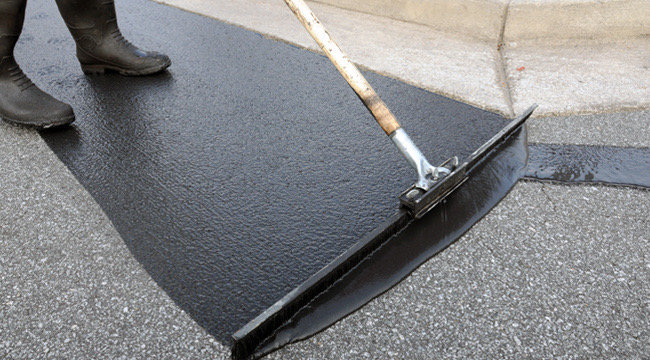
Peeling or flaking sealer is most often caused by sealing too often or sealing over a dirty surface. Coats stack up faster than they wear, the thick film can't flex with the asphalt, and it lets go. The fix is to remove the loose material, clean thoroughly, and get on a two-to-three-year schedule.
Common causes of peeling
- Over-sealing. Annual coats build a thick layer, especially in low-traffic areas.
- Poor cleaning. Sealer over dirt, dust or oil doesn't bond.
- Bad weather. Sealing on cold or damp days, or right before rain.
- Thick single coats that don't cure evenly.
What to do before the next coat
- Remove loose, flaking sealer so the new coat doesn't sit on it.
- Clean the full surface and treat oil spots.
- Apply thin coats in good weather.
If peeling is widespread, tell us when you request an estimate. Photos help.
The right schedule
Most driveways need a fresh coat every two to three years. If the existing coat is still even and water still beads, wait. Read how often to sealcoat.
How to tell peeling from normal wear
| What you see | Likely cause |
|---|---|
| Coat worn thin on tire paths, edges still black | Normal wear. Time to reseal. |
| Flakes lifting off, especially by edges and garage | Over-sealing buildup. |
| Peeling only around old stains | Oil spots weren't treated. |
| Patchy peeling everywhere | Dirty surface or bad weather during application. |
Preventing it next time
- Seal only when the old coat has worn, usually every two to three years.
- Make sure cleaning and oil spot treatment are part of the job.
- Seal on warm, dry days with no rain in the forecast.
- Prefer thin, even coats over one heavy coat.
Prep and price
Every sealcoating job includes edging, cleaning and oil spot treatment. Most residential driveway sealcoating projects range from $250–$550. Your final price depends on driveway size, surface condition, preparation, and any additional repairs needed. Request a free estimate for pricing specific to your driveway.