
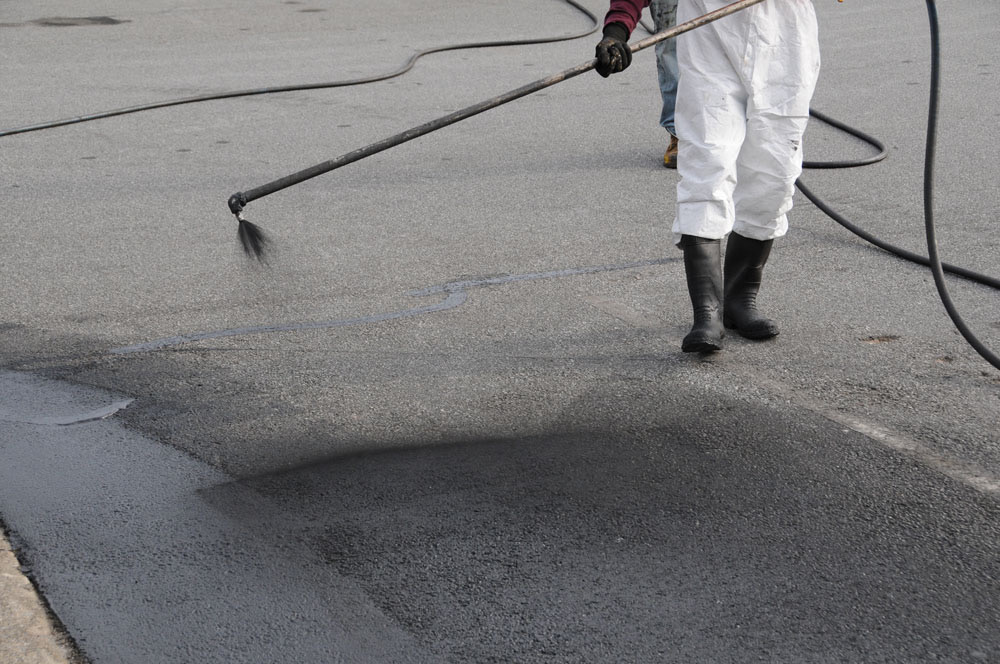
Cold patch is a temporary fix. Infrared patching is a longer-lasting repair that heats the existing asphalt and blends new material into it, so there's no seam for water to get into. For a driveway that has to survive Illinois freeze-thaw cycles and snow plows, the seam is what makes the difference.
How each repair works
| Cold patch | Infrared repair | |
|---|---|---|
| Process | Pre-mixed asphalt pressed into the hole | Infrared heater softens the area, new asphalt is mixed in and compacted |
| Bond | Sits in the hole with a seam around it | Blends with surrounding asphalt, no hard seam |
| Durability | Often loosens within a season | Typically lasts much longer when the base is sound |
| Appearance | Visible plug | Blends in, especially after sealing |
| Best use | Emergency fix until warm weather | Permanent repair of isolated damage |
Why cold patch pops out
Cold patch never fully bonds with the asphalt around it. Water gets into the seam, freezes and expands, and the patch loosens. A plow blade or a turning tire finishes the job.
When neither will last
Patches only work when the base underneath is solid. If the area is sinking or the potholes keep coming back, water has softened the base. Clay soils common in the region hold water, which makes this more likely. Those areas need to be dug out and rebuilt, or the driveway resurfaced. See sealing vs. resurfacing.
Patch first, then seal
- Repair potholes and failed areas.
- Fill open cracks with a proper crack filler.
- Let repairs cure as the repair contractor recommends.
- Sealcoat the whole driveway so repairs and original asphalt match.
Signs a patch is failing
- A visible gap or crack around the edge of the patch.
- The patch sitting higher or lower than the surrounding surface.
- Loose material around the patch after winter.
- Water collecting on or around it.
Plows and patches
Snow plows are hard on any raised edge. A cold patch that sits a little proud of the surface is easy for a blade to catch and pull loose. Seamless repairs that sit flush with the surrounding asphalt give a plow nothing to grab. If you use a plow service, point out repaired areas and ask them to keep the blade slightly raised.
Cost perspective
Repairs cost more than sealing, but far less than resurfacing or replacing a driveway. National cost guides such as HomeAdvisor put full asphalt replacement at roughly $8 to $15 per square foot including tear-out. Fixing isolated damage early, then sealing, is how you keep a driveway out of that category.
Our role
We only do sealcoating, not patching. If your driveway needs repairs first, we'll point them out in your estimate so you can have them done before sealing. Most residential driveway sealcoating projects range from $250–$550. Your final price depends on driveway size, surface condition, preparation, and any additional repairs needed. Request a free estimate for pricing specific to your driveway.