
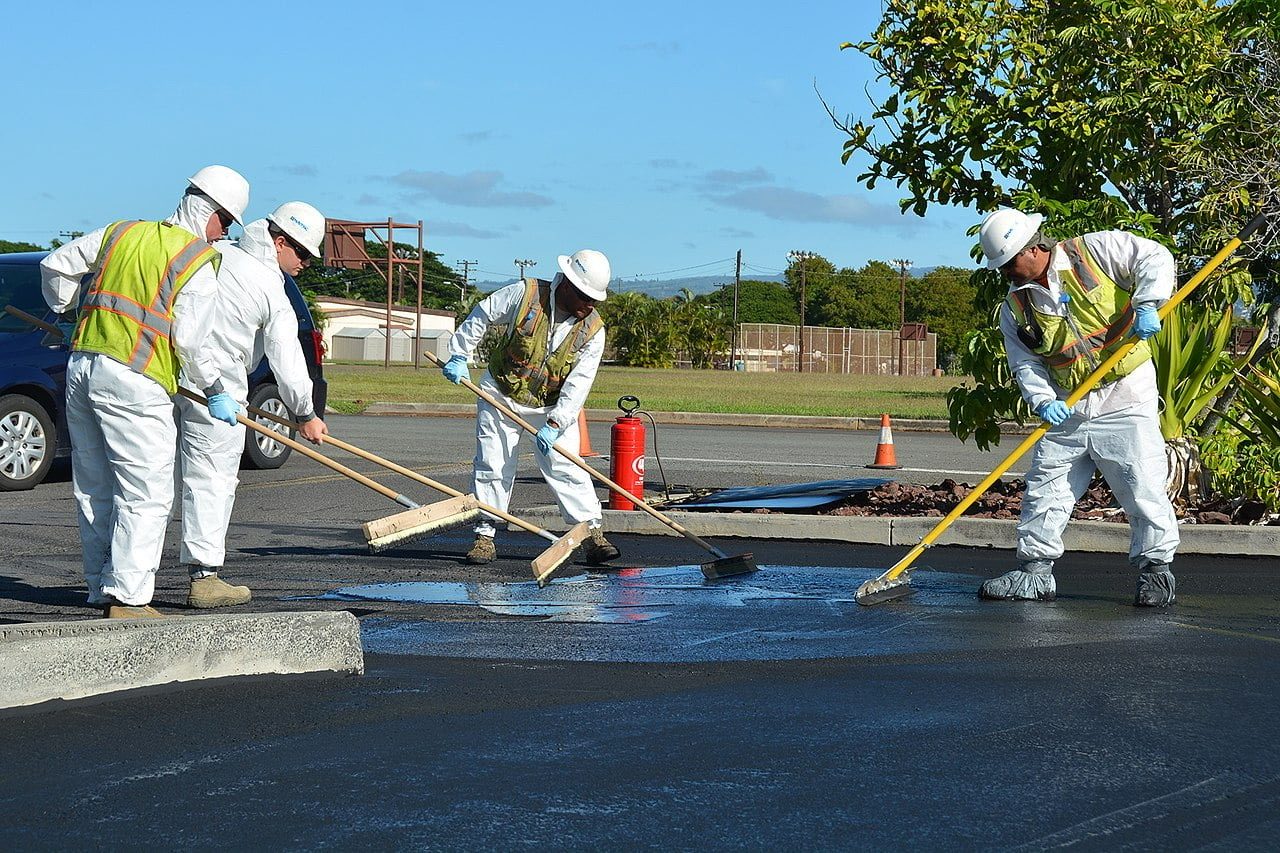
Buckets of driveway sealer are easy to find at any home improvement store, and plenty of Northbrook homeowners have wondered whether to just do it themselves. Sometimes that's a reasonable choice. Often it isn't. Here's an honest look at both, so you can decide what's right for your driveway.
What a DIY sealcoating weekend involves
Doing it yourself is more than rolling on sealer. A typical DIY job means:
- Buying enough sealer for your driveway's square footage, plus a squeegee or brush, edging tools, crack filler and oil spot primer.
- Edging the borders and pulling grass back from the asphalt.
- Cleaning the surface thoroughly, usually with a power washer, then letting it dry completely.
- Treating every oil stain so the sealer will bond.
- Applying thin, even coats, cutting in by hand along concrete, brick and the garage.
- Keeping everyone off the driveway for a couple of days.
For a small, simple driveway in good shape, a careful homeowner can get a decent result. The most common DIY problems are skipped prep, coats that are too thick, sealer splashed onto concrete or the garage floor, and sealing on a day that's too cool or too close to rain.
What a professional job adds
The difference is mostly in the prep and consistency. Every job we do includes edging, cleaning and oil spot treatment before any sealer is applied, then an even application across the whole surface with clean edges along borders. We also pay close attention to the weather, and reschedule if rain is in the forecast rather than risk a washed-out finish.
Professional-grade sealer is applied at a consistent thickness, which helps it wear evenly instead of building up in some spots and thinning out in others.
Comparing the real cost
DIY looks cheaper on the receipt, but it helps to count everything: materials, tools, a power washer if you don't own one, and a full weekend of work. Then there's the cost of a coat that peels early or needs to be redone.
Most residential driveway sealcoating projects range from $250–$550. Your final price depends on driveway size, surface condition, preparation, and any additional repairs needed. Request a free estimate for pricing specific to your driveway.
For many homeowners, that range is close enough to the cost of materials and tools that the time saved and the more even result make hiring out worth it. For others with a small driveway and the time to do it right, DIY can make sense.
When DIY is a bad idea
- The driveway has wide cracks, potholes or alligator cracking that need repair first.
- It's a long, sloped or detailed driveway with lots of borders to cut in.
- There are many deep oil stains.
- The forecast is uncertain or temperatures are near 50°F.
How to compare professional quotes
If you get more than one quote, make sure you're comparing the same job. Ask each contractor whether edging, cleaning and oil spot treatment are included, how many coats they apply, what type of sealer they use, and what happens if it rains. Our guide on what it costs to sealcoat an asphalt driveway lists the questions to ask.
Whichever you choose: timing and care
Seal between late spring and early fall, on a day with dry pavement, temperatures of at least 50°F and rising, and about 24 hours without rain, following the product's instructions. Plan on a fresh coat every two to three years, and keep cars off until the surface is fully cured. If you'd like a professional quote to compare against a DIY plan, our residential sealcoating estimates are free.