
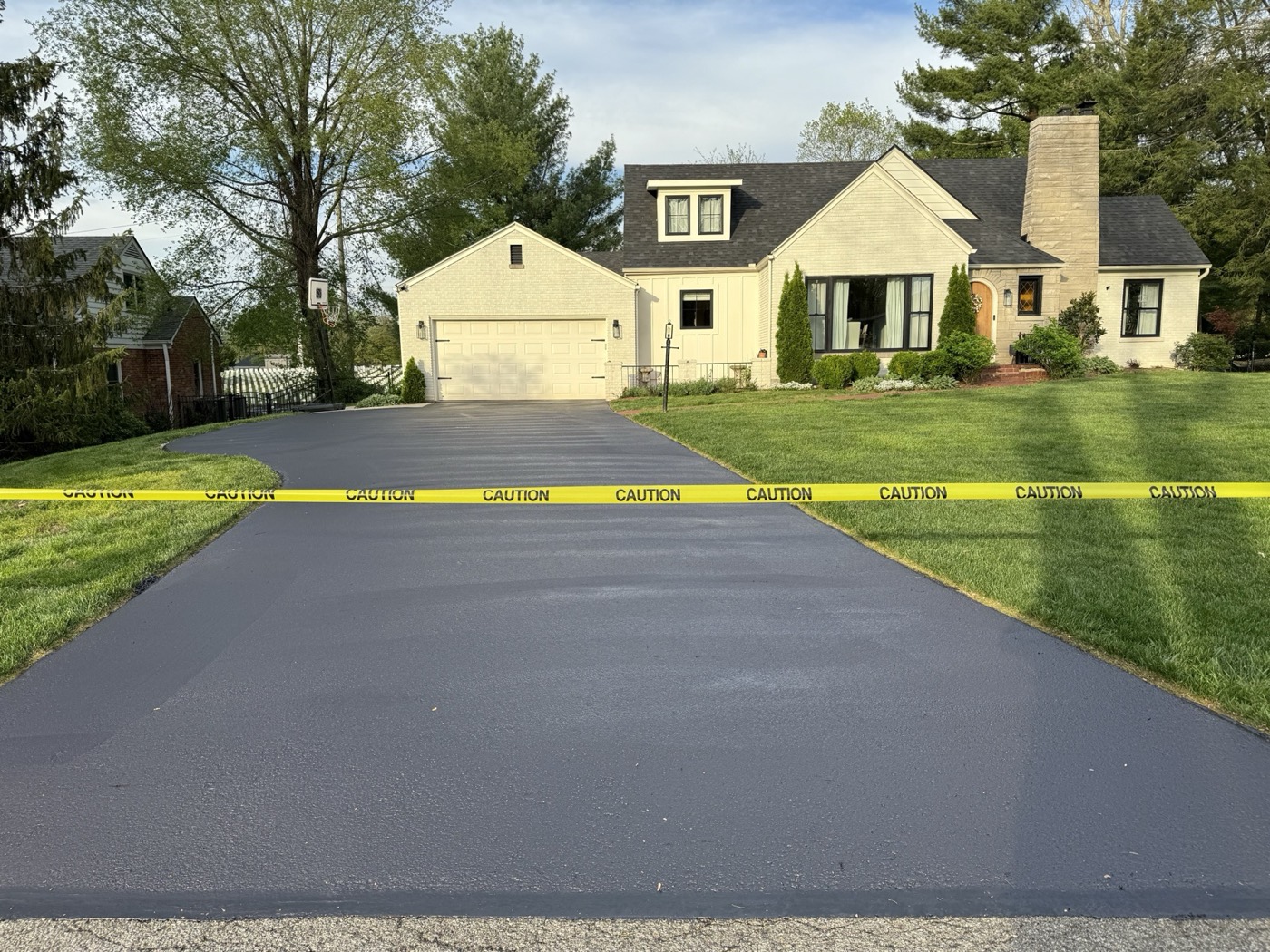
For a lot of Deerfield families, the driveway is in use from morning to night: cars coming and going, kids on bikes, a basketball hoop, delivery vans and the occasional moving truck. Daily use is exactly why driveway sealcoating is worth doing, and also why it takes a little planning. This guide focuses on the practical side: what to expect, how to schedule around your household, and how to keep the coating looking good once it's down.
What daily use does to a driveway
Every car that parks leaves small oil and fluid drips. Tires turning in place grind at the surface. Salt rides in on the tires all winter. Over time the driveway fades to gray, oil stains soak in where cars park, and the area in front of the garage starts to wear first. Sealcoating puts a fresh protective layer over the whole surface every two to three years so that wear stays on the coating instead of the asphalt.
Planning sealcoating day around your family
The job itself usually happens in one visit, typically within a day for a residential driveway. The real planning is about the two days after. A few tips:
- Pick a low-traffic stretch. A weekday when nobody has early appointments works well. Avoid the days right before a party or event.
- Park on the street the night before. Cars parked in the garage will be stuck until the driveway can take traffic.
- Tell the kids. Bikes, scooters, chalk and balls stay off until the surface is fully dry.
- Keep pets inside or in the back yard. Paw prints in fresh sealer are hard to fix.
- Turn off sprinklers for 24 hours before and after.
You don't need to be home while we work. Our guide on how to get ready for sealcoating day has the full checklist.
Oil stains and the area by the garage
The spots where cars park every day usually have the worst stains. Sealer won't bond properly over oil, which is why oil spot treatment is part of every job we do, along with edging and cleaning. Treated spots are sealed with the rest of the driveway. Very old, deep stains may still show faintly, but the coating will bond and protect the asphalt.
How long before you can use it again
In warm, dry weather most driveways can handle foot traffic after about 24 hours and cars after about 48. Cooler temperatures, humidity and shade can stretch that, and the sealer manufacturer's instructions apply too. For the first week, avoid turning the steering wheel while the car is stopped and keep heavy trucks off if you can. Light tire marks on a new coat are common and usually fade.
When to schedule in Deerfield
The sealing season in the Chicago area runs roughly late spring through early fall, when temperatures are at least 50°F and rising and the pavement is dry. Summer offers the most predictable weather, which helps if you have to plan around school and work schedules. Early fall protects the driveway right before salt season. More on that in the best time of year to sealcoat in Illinois.
Basketball hoops, chalk and wear spots
Play areas on the driveway wear the coating faster, especially where a hoop base sits or kids ride bikes in circles. That's normal. If one area is visibly worn while the rest of the driveway still looks good, it's a sign you're due for the next coat soon, not a problem with the sealer.
What it costs
Most residential driveway sealcoating projects range from $250–$550. Your final price depends on driveway size, surface condition, preparation, and any additional repairs needed. Request a free estimate for pricing specific to your driveway.
Request an estimate with your address and, if you like, a couple of photos of the worst spots. We'll measure by satellite and a team member will review it before we send it, usually within 24 hours.