
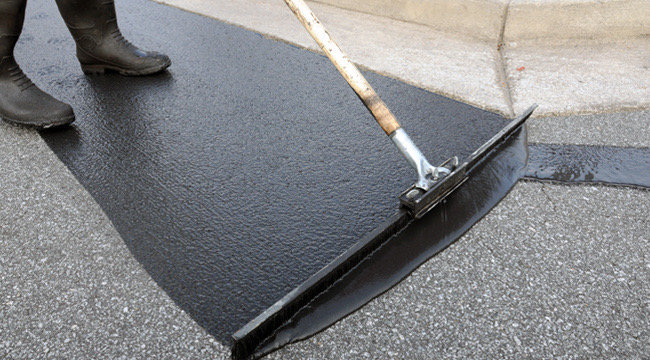
Oil stains have to be treated before sealcoating, because sealer won't bond to oil. Applied straight over a stain, the new coat lifts and peels in that spot within weeks. With the right prep, stained areas are sealed along with the rest of the driveway.
Why oil is hard on asphalt
Asphalt is held together by a petroleum-based binder. Motor oil, transmission fluid and gas soften that binder, so a heavily stained spot can become soft and crumbly over time. That's why stains where cars park every day are often the first places a driveway breaks down.
How stains are handled before sealing
- Clean the area to remove surface oil and grime.
- Apply an oil spot primer so the sealer can bond.
- Seal the whole driveway, stained areas included.
Oil spot treatment is part of every sealcoating job we do, along with edging and cleaning. Very old, deep stains may still show faintly through the new coat, but the coating will hold.
When a stain has done real damage
If the asphalt under a stain has gone soft, crumbly or pitted, it needs a patch before sealing. We'll point that out in your estimate.
Preventing new stains
- Fix leaks early. A drip pan helps in the meantime.
- Blot fresh spills with cat litter or absorbent, then sweep it up.
- Keep the driveway sealed so spills sit on the coating instead of soaking in.
Fresh spill vs. old stain
| Situation | What to do |
|---|---|
| Fresh spill | Cover with cat litter or absorbent, let it sit, sweep up. Don't hose it into the asphalt. |
| Old surface stain | Clean and treat with oil spot primer before sealing. |
| Soft or crumbling under the stain | Patch before sealing. |
Gas and other fluids
Gasoline, transmission fluid and power steering fluid are even harder on asphalt than motor oil because they dissolve the binder more quickly. If a lawn mower or gas can tips over, clean it up right away. A sealed driveway gives you more time, since the spill sits on the coating instead of soaking straight in.
Timing and price
Seal between late spring and early fall on a dry day of at least 50°F and rising. Plan on a fresh coat every two to three years. Most residential driveway sealcoating projects range from $250–$550. Your final price depends on driveway size, surface condition, preparation, and any additional repairs needed. Request a free estimate for pricing specific to your driveway.